

Utility-scale generation
Solar and BESS as primary power
- Hybrid
- 3 MW / 3 MWhof BESS with solar and engines at Baker's Bay, Bahamas
- Largest plant in Mexico
- 10 MWPronal, Villa de Reyes, SLP, 2019
- Energy generated
- 2,900+ GWhestimated from the group’s plants in Mexico
- Demand
- 2.5% a yeargrowth in electricity consumption, 2025–2039 (SENER, PLADESE)
Utility-scale generation
Power plants for industry, developments and the grid
GIS Power develops, finances, builds and operates industrial and utility-scale power plants. Primary power is solar with battery storage (BESS); gas, engines and the grid come in where the site needs firm capacity, backup or power at night.
Solar and BESS first
Everything else where it is neededA large plant is designed from the load: how much the site consumes, at what time, how continuous supply must be and what an outage costs. That curve sizes the solar generation, the storage that shifts it to the hours without sun, and the backup that makes it firm.
Where the load cannot be interrupted or the solar resource falls short, the plant becomes a hybrid: engines on natural gas or biogas, and the grid where it exists. Where there is also a heat or cooling demand, cogeneration puts the engine’s heat to use.
Each project sits in its own special purpose vehicle (SPV), which raises the financing, owns the plant and sells the energy or the service to the user under a 48 to 180 month contract.
When it is not a fit
- If your demand is smaller and steady, and the site’s grid supply covers it comfortably at a good price.
- If there is no land, roof or nearby site for the solar generation the load requires.
- If your operation at the site may end before the energy contract term.
Lines
Ways to generate at scale
Combined to suit the siteUtility-scale solar
Industrial and utility-scale solar, on site or at a remote location.
02Hybrid and BESS
Solar, storage and engines in one plant, under one control system.
03Gas-fired generation
Natural gas or biogas engines as backup, complement or peaking plant.
04Islanded microgrids
Isolated supply for developments and sites the grid does not reach or cannot serve.
05Green Data Center
Solar and BESS primary power for data centers, built in phases.
06Cogeneration
Power and useful heat where the site has a steady thermal demand.
From feasibility to operation
One party accountable at every stageThe project moves in stages, and each one leaves something a lender can review: an energy balance, a permitting path, a contract and a plant with contracted availability.
- Feasibility
Load curve, solar resource, land, interconnection and financial model.
- Development
Permits with the CNE, studies with CENACE, gas supply where needed and the energy contract.
- Finance
SPV, equity and debt, with the energy contract as the source of repayment.
- Engineering and construction
EPC with brand-authorized commercial partners: INNIO Jenbacher, Guascor, Pylontech and Huawei.
- Operation
24/7 operation and maintenance with contracted availability.
Group references
Plants designed and builtBaker's Bay Golf & Ocean Club
Hybrid plant: three Jenbacher JMS420 engines, solar PV and a 3 MW / 3 MWh BESS. EPC in a joint venture.
View project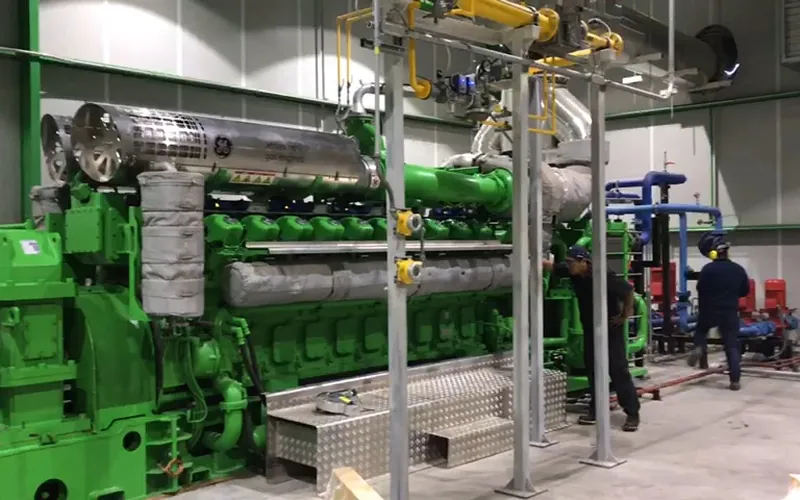 San Luis Potosí · 2018 · 9.5 MW
Logistik Industrial Park
Three Jenbacher JMS620 biogas engines operating as the park’s peaking plant.
View project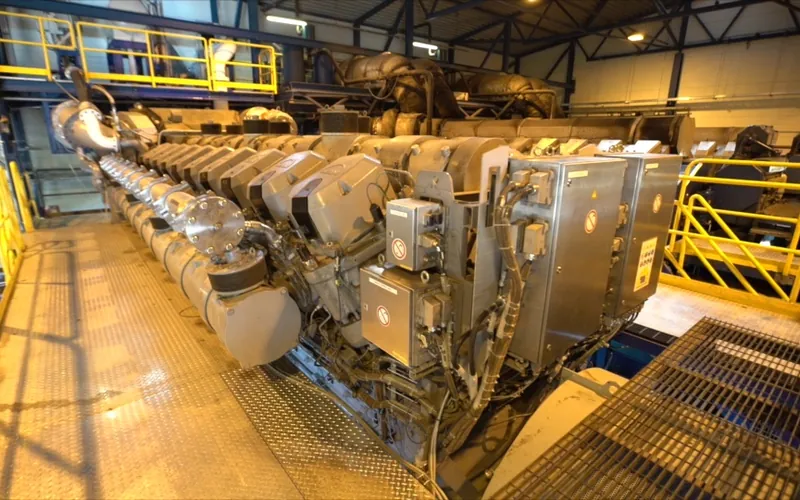 Villa de Reyes · 2019 · 10 MW
Pronal · Productora Nacional de Papel
A 10 MW plant for a continuous-process industry.
View projectPermits
What Mexico’s Electricity Sector Law says< 0.7MW
No permit
Exempt generator (LSE art. 19).
0.7–20MW
Simplified process possible
Grid-connected self-supply (LSE art. 30).
Surplus
Sold only to CFE
An intermittent plant that injects power must have its own backup or pay for it (LSE art. 32).
≥ 54%
Mixed schemes
CFE’s share in mixed projects (LSE art. 40).
Ley del Sector Eléctrico (LSE), DOF 18-Mar-2025, arts. 19, 30, 32 and 40. Consumption growth: SENER, PLADESE 2025–2040, DOF 17-Oct-2025.
Frequently asked questions
Why solar and BESS as primary power?
Because solar power does not depend on a fuel price, and storage delivers it when the site needs it. Gas and the grid cover what solar cannot: long nights, cloudy days and the firmness a critical load requires.
Does the plant have to be on my property?
Not always. Generation can be on site or at a remote location, depending on the land, the interconnection and the permitting route that applies to the project.
Who invests in the plant?
Either an SPV invests and sells you the energy or the service, or your company invests through a lease, a loan or cash. Contract terms run from 48 to 180 months, depending on the scheme.
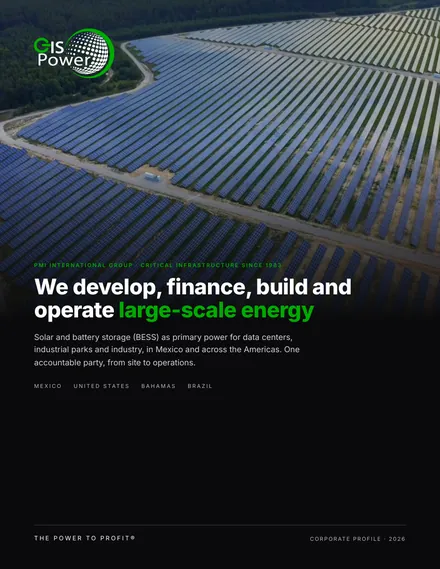
Download
Corporate profile
Who we are, what we do, how to contract and the group's projects, in 4 pages to share with your team.
Download the profile (PDF, 1 MB)Let’s discuss your generation project
Location, demand and stage: that is where we start.
By sending you accept our privacy notice.