
B · Utility-scale generation · Islanded microgrids
A grid of its own for a development that cannot wait for the grid
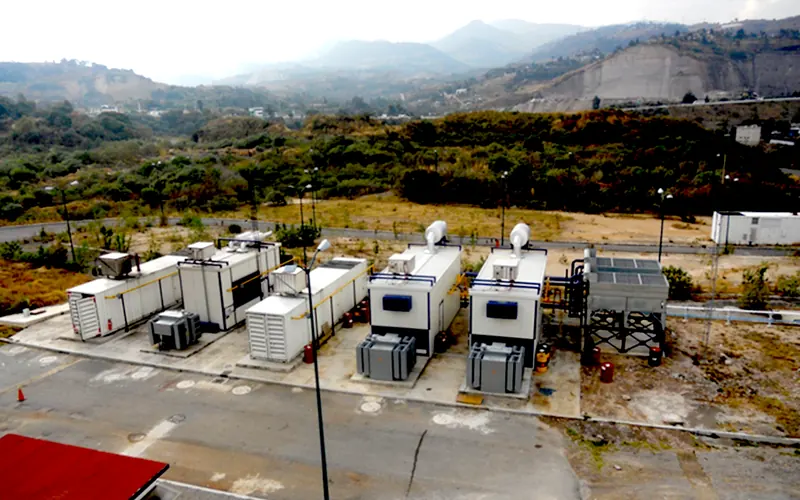
An islanded microgrid generates, stores and distributes power for a development, a park or a remote site without relying on the public grid. That is how the plant the group built at Residencial Bosque Real has worked since 2009: it is the homes’ electricity supply.
What an islanded microgrid is
Generation, distribution and control in one systemIt is a complete power grid at the scale of a development: its own generation, storage, medium-voltage distribution and a control system that holds frequency and voltage without help from the public grid. If the plant fails, there is no grid behind it; that is why it is designed with redundancy and operated around the clock.
In GIS Power’s approach, primary power for a new microgrid is solar with storage (BESS), and gas or biogas engines provide firmness. Each microgrid is sized for today’s load and for the development’s growth.
When it is not a fit
- If the public grid reaches the site with enough capacity and within the time the development needs.
- If the development cannot support a long-term operating contract: an island without 24/7 operation is not reliable.
- If the load is small: the fixed cost of running a grid of its own outweighs the benefit.
Components
What a microgrid includes
Every piece with redundancySolar
Primary power, on roofs, parking areas or a site within the development.
Storage (BESS)
Carries solar into the night and stabilizes the grid during transients.
Engines
On gas or biogas, with units of different sizes to follow the load, as at Bosque Real.
Distribution
The development’s medium-voltage network, substations and protection.
Control
A system that decides which source delivers, shares the load and protects the island.
24/7 operation
Operation and maintenance with contracted availability.
Reference: Residencial Bosque Real
Huixquilucan, State of Mexico · 2009 · EPC + O&M 2009–20167.5MW
Capacity
Isolated supply, no grid
5
Engines
3 × 2,000 kWe + 2 × 750 kWe
2009
A first
First self-supply permit for a residential and commercial development in Mexico
990+GWh
Energy generated
Estimated to date
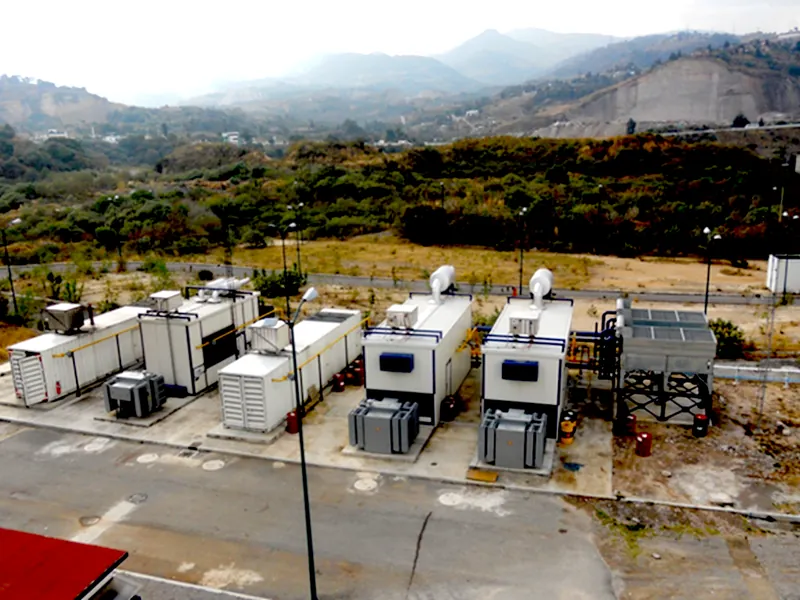
The group carried out the engineering, installation and commissioning of the Bosque Real plant, and operated and maintained it from 2009 to 2016. The plant runs on isolated supply, independent of the grid, with five engines in two sizes to follow the development’s load.
It is still operating today and is the homes’ electricity supply.
Regulation
What Mexico’s Electricity Sector Law saysIsolated
Isolated self-supply
The LSE regulates self-supply that is not connected to the grid (LSE art. 31).
< 0.7MW
No permit
Exempt generator (LSE art. 19).
Backup
Emergencies only
Generation used only for emergencies or outages does not require a permit (LSE art. 19).
Grid tie
If it connects
Grid-connected self-supply from 0.7 MW (LSE art. 30).
Ley del Sector Eléctrico (LSE), DOF 18-Mar-2025, arts. 19, 30 and 31. The scheme that applies to each microgrid is confirmed during feasibility.
Frequently asked questions
What happens if an engine fails in an islanded microgrid?
The plant is designed with more units than the load requires, so one can be out for maintenance or fail without cutting supply. With BESS, the batteries carry the load while another unit starts.
Can a microgrid connect to the grid later?
Yes, if it is designed for it. Connecting changes the regulatory scheme: grid-connected self-supply (LSE art. 30) and what the law requires of surplus power (LSE art. 32) are reviewed.
Who operates the microgrid?
Naturally, whoever built it, with availability set in the contract. At Bosque Real, the group’s scope included operation and maintenance from 2009 to 2016.
Does it work for a remote site or an island?
Yes. It is the same principle as the hybrid plant at Baker's Bay, on an island in the Bahamas: solar, BESS and engines in a single plant.
Let’s discuss your development
Location, expected load and timeline: that is where we start.
By sending you accept our privacy notice.