

Green Data Center
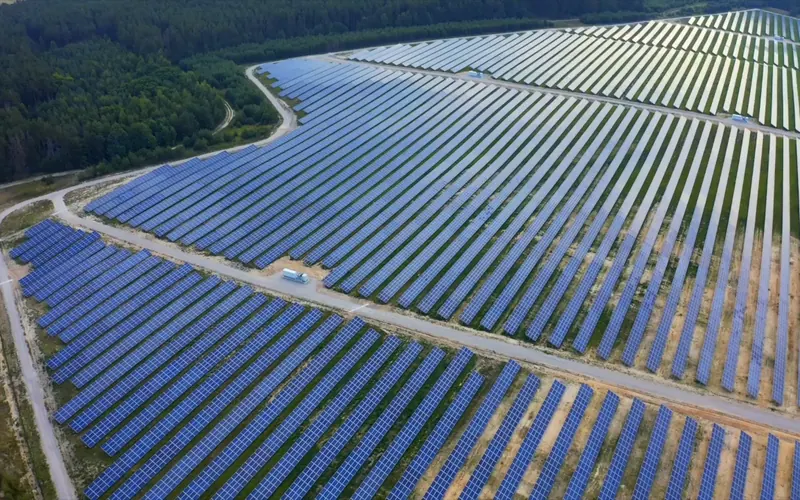
Solar and BESS primary power, built in phases
- Precedent
- 2014Alestra Green Data Center, Querétaro
- Scale
- 35,000 m²modular data center designed and built
- On-site energy
- 100%of Alestra’s power and chilled water
- Mission critical
- 13data centers and critical facilities built since 1983
Green Data Center by GIS Power
A data center born with its own primary power
A data center needs continuous power, in volume and from day one. Green Data Center solves it on site: solar and battery storage (BESS) as primary power, the grid and gas as backup, and a project company that finances and operates the plant as your IT load grows.
What Green Data Center is
Power as part of the project, not an afterthoughtIn most data centers, power is solved last: you request the grid connection and wait. Green Data Center reverses the order. The power plant is designed together with the building, sized to the IT load, and goes live with the first phase.
Primary power is solar with battery storage. The grid and, where it makes sense, natural gas or cogeneration provide backup and support. Redundancy (UPS, emergency generation and distribution) is designed to the mission-critical standards the group has applied since 1983.
GIS Power develops, finances, builds and operates the plant. The data center operator pays for the energy or the service, with no upfront investment in the plant.
When it is not a fit
- When the site has no roof, land or nearby plot for the solar capacity the load requires.
- When the IT load is small and steady and the site’s grid connection already covers it comfortably.
- When the operator needs power within weeks and there is no time for permits: then the conversation starts with bridge power.
How the power is built
Each source has its role
Solar and BESS first; everything else is backupSolar as primary power
On-site or nearby generation, sized to the IT load and its growth.
Battery storage (BESS)
Stores solar energy and delivers it when needed, including at night, and carries the load through transients.
The grid
Backup and support. Any surplus can only be sold to CFE, and an intermittent plant that exports must have its own backup (Electricity Sector Law, art. 32).
Gas and chilled water
Where it makes sense, cogeneration for power and absorption-chilled water, as at Alestra.
Mission-critical redundancy
UPS, emergency generation and redundant distribution. Emergency-only generation needs no permit (art. 19).
24/7 operations
Operations and maintenance with contractual availability, for the life of the project.
The sun covers the day; the battery, evening and night; the grid or gas, the rest
How a constant IT load is covered in a Green Data Center.Illustrative · no figures
Takeaway
Midday solar surplus charges the battery, which delivers that energy after sunset. Backup covers only the gap.
The actual share of each source comes from each site’s feasibility study, with an 8,760-hour balance.
Illustrative profile, not to scale. Not a specific project.
Built in phases
It can start with a few MWA data center’s load grows hall by hall and client by client. The power plant grows with it: each phase is designed, financed and commissioned when the load needs it, without paying today for capacity you will use in five years.
- Phase 1
Power for the first halls. If the grid connection is not ready, on-site bridge power.
- Phase 2
More solar and more storage as IT load comes online. The grid and gas as backup.
- Phase 3
Full campus scale, with the permanent grid connection and the whole plant in operation.
How it is financed
The operator does not invest in the plantEach project sits in its own special purpose vehicle (SPV). The SPV owns the plant, raises the debt and equity, and sells the energy or the service to the data center under a long-term contract.
For a data center, the natural model is energy as a service: a fee for capacity, availability and operations, with contractual performance targets. A power purchase agreement (PPA) or a BOOT scheme, where the plant transfers to the operator at the end of the term, also work.
What a lender looks for
- A long-term energy contract with the data center operator.
- Permits, interconnection and land secured, or a clear path to them.
- A single party accountable for construction and operations, with contractual availability.
Permits
What Mexico’s Electricity Sector Law says< 0.7MW
No permit
Exempt generator (art. 19).
0.7–20MW
Simplified process possible
Grid-connected self-supply, under CNE guidelines (art. 30).
> 20MW
Generation permit
Standard CNE process and CENACE interconnection.
Backup
Emergency only
Generation used only for emergencies or outages needs no permit (art. 19).
Electricity Sector Law (Ley del Sector Eléctrico), Official Gazette, Mar 18, 2025, arts. 19, 30 and 32.
The precedent: Alestra Green Data Center
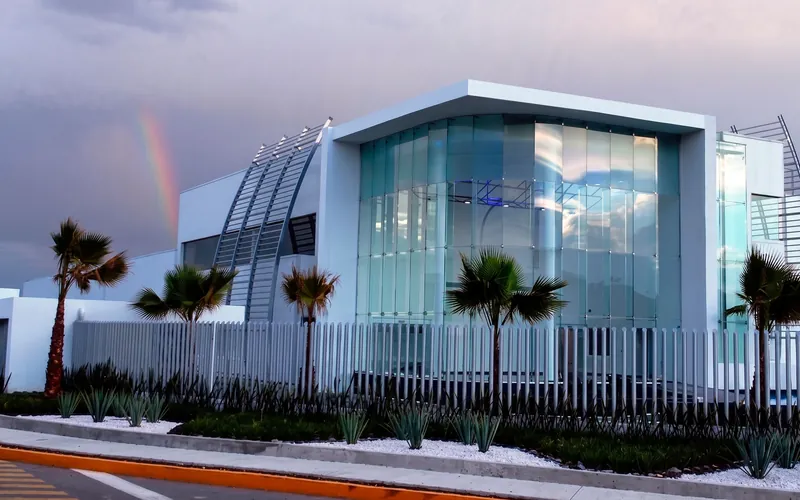
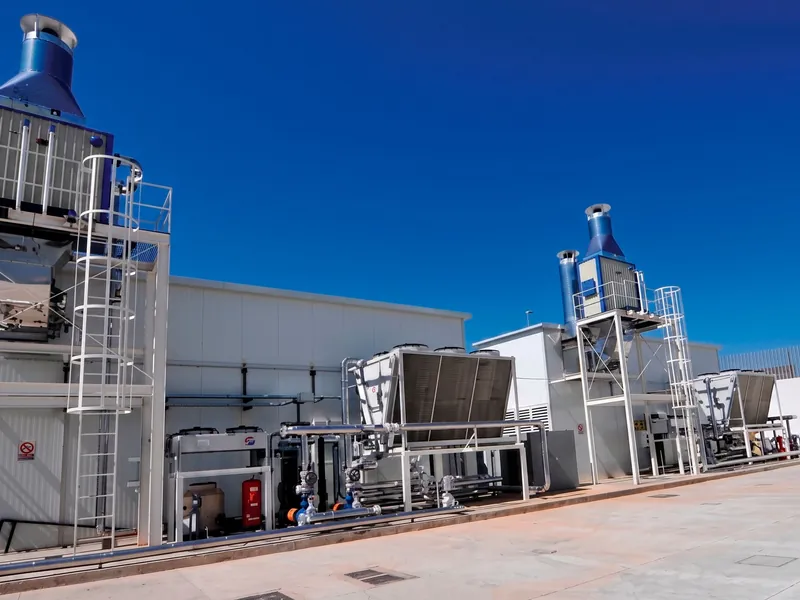
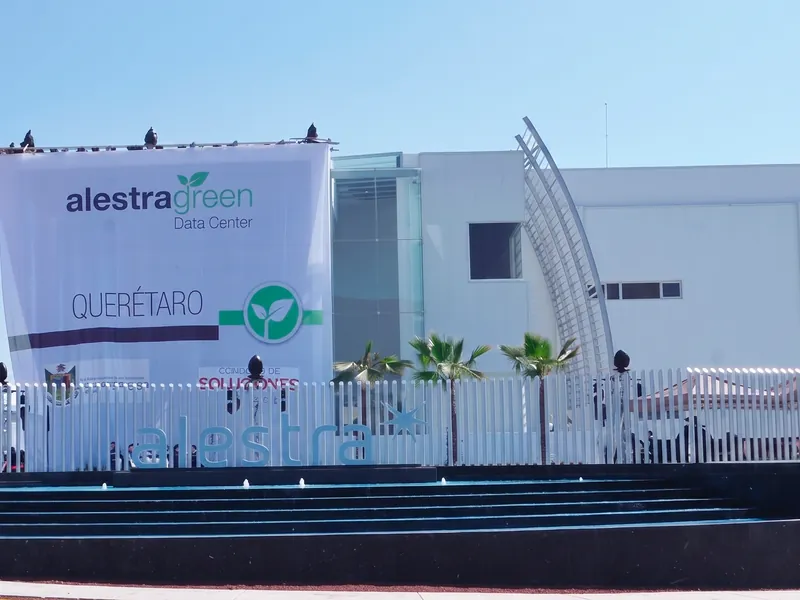
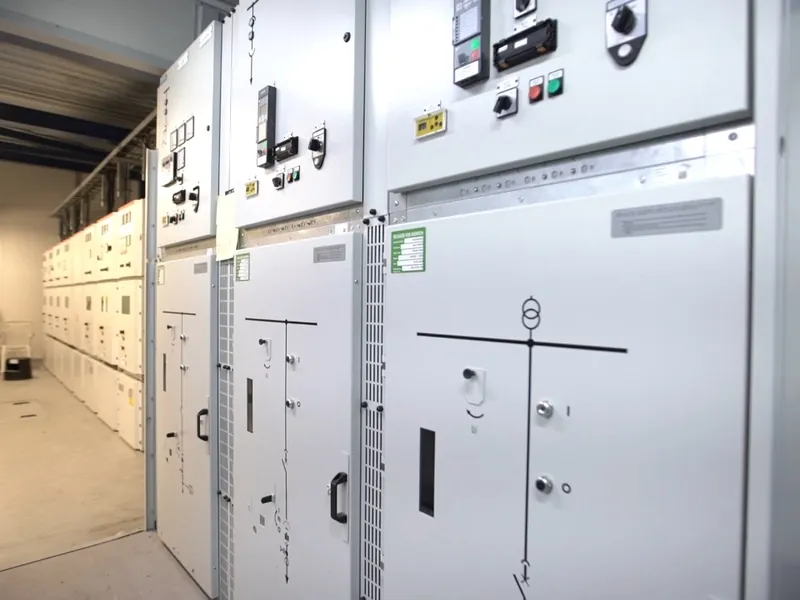
Querétaro · 2013–2014The group designed, built and commissioned a 35,000 m² modular data center for Alestra, with 3,500 m² of white space in seven modules. Its cogeneration plant, with two GE Jenbacher engines and two 350-ton absorption chillers, supplied 100% of its power and chilled water, cutting energy costs by 45%.
The project received DC Dynamics’ "Innovation in the Mega Data Center" award on October 1, 2014. Green Data Center by GIS Power builds on that experience and changes the primary source: solar and BESS.
Frequently asked questions
How small can a Green Data Center start?
It can start with a few MW if the plan is to grow in phases. What matters is a growth plan for the IT load and a long-term energy contract.
What happens at night or on cloudy days?
Battery storage (BESS) delivers the stored solar energy. When that is not enough, the grid or, where designed in, gas takes over. Mission-critical redundancy (UPS and emergency generation) is independent of the primary source.
Who owns the plant?
The project company (SPV), which finances and operates it. Under a BOOT scheme, the plant transfers to the data center operator at the end of the term.
What if the grid connection is delayed?
The first phase can start on on-site bridge power while the CENACE interconnection is completed.
Download
Corporate profile
Who we are, what we do, how to contract and the group's projects, in 4 pages to share with your team.
Download the profile (PDF, 1 MB)Let’s discuss your data center
Location, expected IT load and stage: that is all we need to start.
By sending you accept our privacy notice.