
Private grids
Pictured: Cuadritos Industrial Park, Celaya
- First in Mexico
- 2009First residential and commercial self-supply permit in Mexico, Bosque Real
- Isolated supply
- 7.5 MWResidencial Bosque Real, independent of the grid
- Own gas pipeline
- 4.8 MWCuadritos Industrial Park, with gas from PEMEX
- Industrial park
- 9.5 MWLogistik Industrial Park, San Luis Potosí
Private grids and microgrids
Your park’s or development’s own power grid
An industrial park or a large development can have its own generation and its own internal distribution grid. GIS Power designs, builds and operates it: solar and BESS as primary power, gas-fired generation where continuity or heat is needed, and an operations team accountable for availability.
What a private grid is
Generation and distribution for a group of usersA private grid carries power from one or more dedicated plants to the users of a park, campus or development, with its own substation, medium-voltage circuits and controls. When it can run disconnected from the public grid, it is called a microgrid.
For the developer, power stops being a constraint on selling or leasing: the park offers available power, with known quality and price, as one more service. For the investor, it is an asset with long-term revenue.
The group built Mexico’s first grid of this kind for a residential and commercial development: Bosque Real, in 2009. It is still running today and supplies the homes’ electricity.
When it is not a fit
- When the park has few users with small loads and the public grid serves them without constraints.
- When no entity (the park, the developer or an SPV) will take on operating the grid for many years.
- When users need to buy power individually from a retail supplier: an isolated grid is not electricity supply under the law.
Components
What a private grid includes
Designed around the load, the heat and the relationship with the public gridSolar and BESS
The park’s primary power, on roofs, parking areas or nearby land, with storage for the night and for transients.
Gas or biogas generation
Engines for continuity and peak demand. Where there is useful heat, cogeneration with steam or chilled water.
Substation and medium voltage
Internal distribution to each user, with protection and metering.
Microgrid control
Coordinates solar, BESS and engines, and allows islanded operation when the public grid fails or is not there.
Operations and maintenance
24/7 operations with contractual availability. At Bosque Real, the group’s scope included operations and maintenance from 2009 to 2016. See O&M.
What Mexico’s Electricity Sector Law says
Isolated or grid-connectedIsolated
Isolated self-supply
No connection to the grid: all energy is consumed within the private grid and is not considered electricity supply (art. 31).
Connected
Grid-connected self-supply
Surplus can only be sold to CFE, with a valid permit and interconnection contract (art. 32).
Intermittent
Own backup
An intermittent plant that exports to the grid must have its own backup, with storage, or pay for it (art. 32).
≥ 0.7MW
Permit
From 0.7 MW, generation needs a CNE permit (art. 19). Between 0.7 and 20 MW grid-connected, a simplified process is possible (art. 30).
Electricity Sector Law (Ley del Sector Eléctrico), DOF 18-Mar-2025, arts. 19, 30, 31 and 32.
Precedents
Three power systems built by the group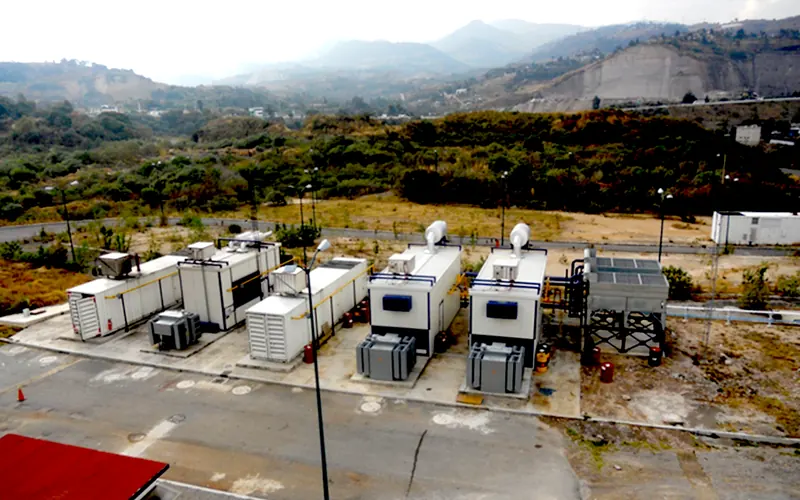 Huixquilucan · 2009 · 7.5 MW
Residencial Bosque Real
Isolated supply with five engines. Mexico’s first residential and commercial self-supply permit; still running today.
See project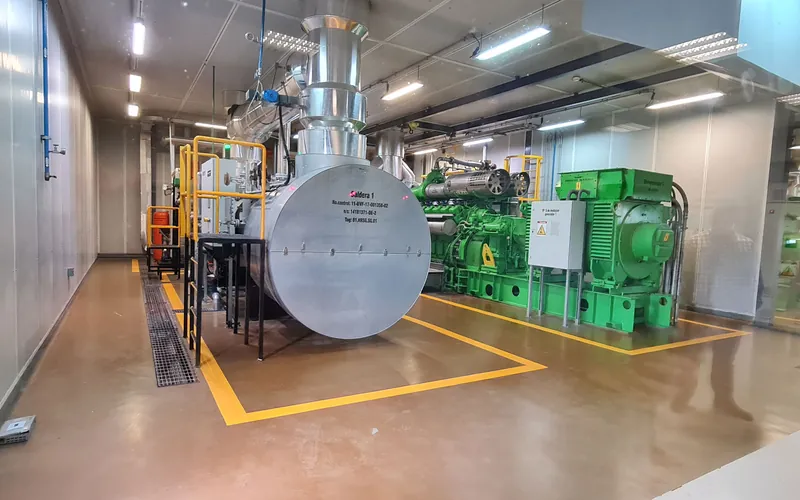 Celaya · 2015 · 4.8 MW
Biotek · Cuadritos Industrial Park
Cogeneration with steam for the park and a dedicated gas pipeline from PEMEX. Mexico’s first Green and Sustainable Industrial Park.
See project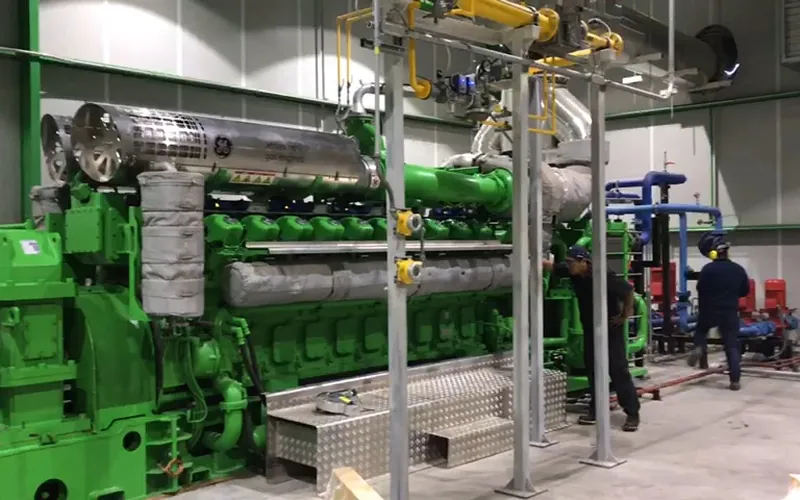 San Luis Potosí · 2018 · 9.5 MW
Logistik Industrial Park
Three Jenbacher JMS620 engines on biogas, running as a peaking plant for the park.
See projectFrequently asked questions
Can a private grid sell power to the park’s users?
It depends on the structure. Under isolated self-supply, energy is consumed within the private grid and is not electricity supply (art. 31). Each park’s structure (who holds the permit and how the service is billed) is defined during development. See permitting and development.
Does it have to be disconnected from the public grid?
No. It can be isolated (art. 31) or grid-connected (art. 32). If connected, surplus can only be sold to CFE, and an intermittent plant that exports must have its own backup or pay for it.
Who invests in the grid?
The park itself, or a project company (SPV) that finances it and bills the park for the energy or the service, with terms of 48 to 180 months depending on the structure. See contracting models.
Can it be done in a park that is already operating?
Yes, in phases. The private grid starts with the users with the largest loads and grows as others join.
Let’s talk about your park or development
Location, number of users and total load: that is where we start.
By sending you accept our privacy notice.