
Development and finance
Gas supply: without reliable gas there is no financeable cogeneration
A cogeneration plant turns natural gas into electricity and useful heat for years. Before designing it, you need to know where the gas comes from, at what pressure, with what capacity and under what contract. It is a condition of the project, not an engineering detail.
What gets checked about the gas
Before designing the plantGas engines and turbines need a minimum inlet pressure and a sustained flow at full load. If the nearby pipeline lacks the pressure or available capacity, it has to be reinforced, the gas compressed or a dedicated lateral built, and that changes the project's cost and schedule.
That is why gas supply is reviewed at origination, together with the offtaker's electrical and thermal demand. A lender will ask for the supply and transport contracts, and the pipeline permitting path if one has to be built.
GIS Power's signature is solar with storage as primary power. Gas cogeneration is the line that fits where there is thermal demand to use.
When it is not a fit
- If there is no pipeline within a reasonable distance and demand does not justify building a lateral.
- If your process uses no heat (steam, hot water or chilled water): without thermal demand, cogeneration loses its edge and solar with BESS is worth assessing.
- If you cannot commit to a gas supply contract for the project term.
Infrastructure
How gas reaches the plant
Four points defined during developmentExisting pipeline
Connection to a nearby transport or distribution network, if it has pressure and capacity available.
Dedicated lateral
A dedicated line from the delivery point to the plant. Gas pipelines require SEMARNAT environmental impact authorization (LGEEPA art. 28 sec. I).
Regulation and metering station
Adjusts pressure to what the equipment needs and meters the gas consumed, which is the basis for billing.
Supply and transport contract
Volume, price, indexation and term, aligned with the term of the energy contract.
Precedent: Cuadritos Industrial Park
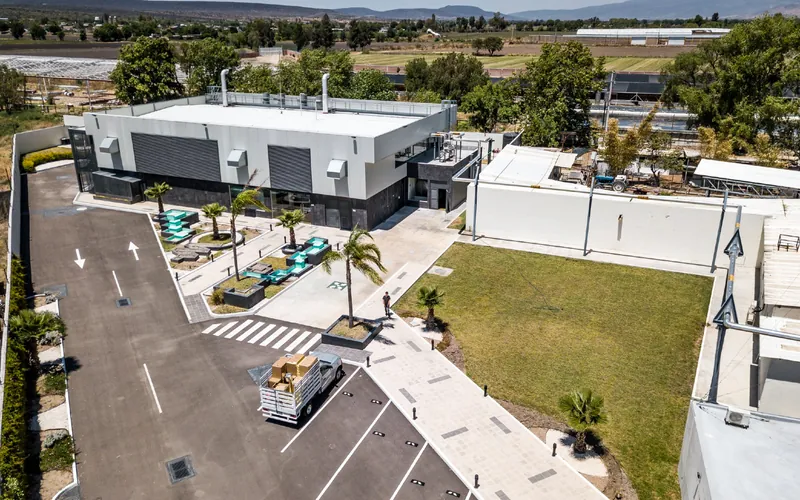
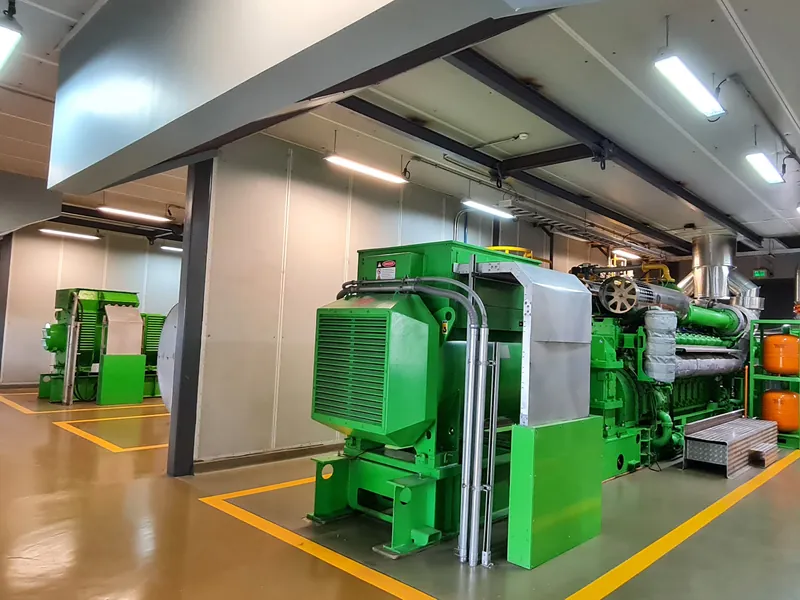
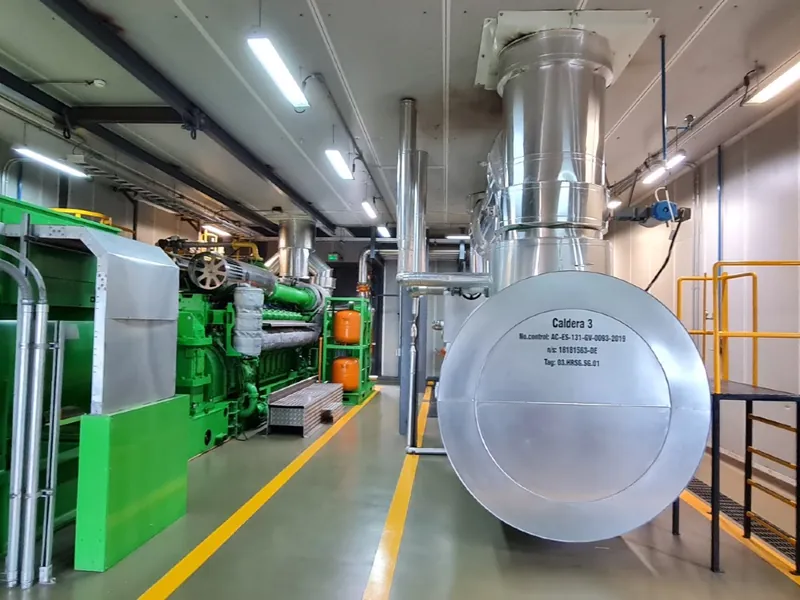
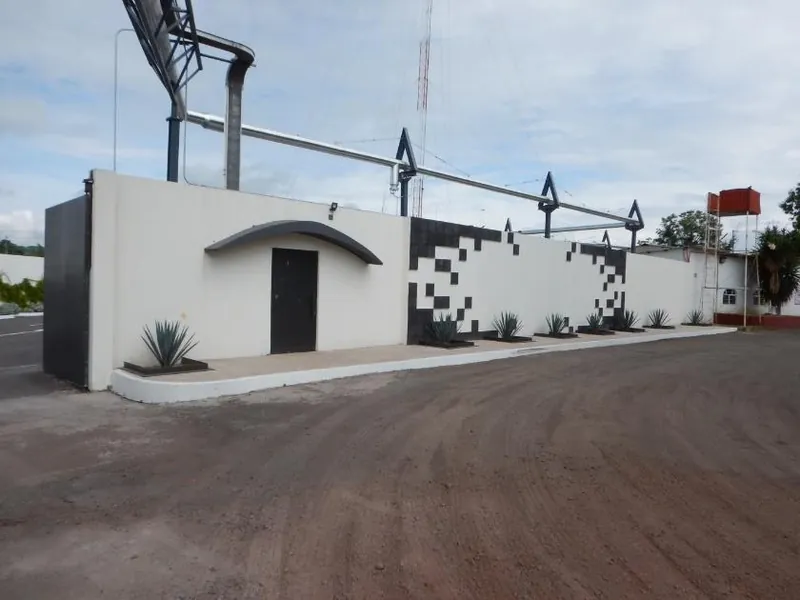
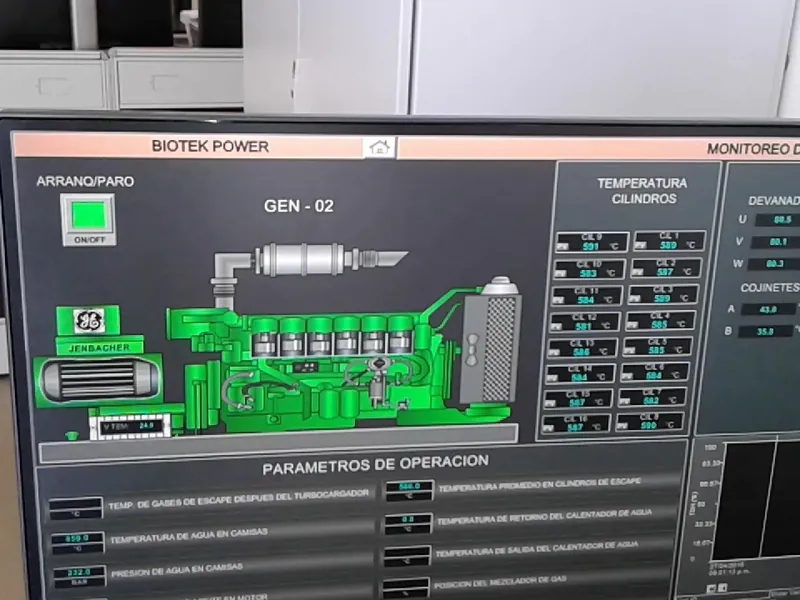
Celaya, Gto. · 2012–2015For Biotek Power and Cuadritos Industrial Park, the group designed and built a 4.8 MW cogeneration plant with lean-burn GE Jenbacher engines and Aprovis heat recovery boilers producing 4 t of steam at 7 bar.
Gas supply was solved with a dedicated pipeline from PEMEX. The project was presented as Mexico's first Green and Sustainable Industrial Park.
Fact sheet
- 4.8 MW of cogeneration
- Lean-burn GE Jenbacher engines
- Heat recovery boilers: 4 t of steam at 7 bar
- Dedicated pipeline from PEMEX
- Design and construction (EPC), completed in December 2015
Frequently asked questions
What gas pressure does a cogeneration plant need?
It depends on the equipment: each engine or turbine has its own minimum inlet pressure. It is set with the manufacturer during basic engineering and compared with what the pipeline delivers.
Who builds the gas lateral if one is needed?
That is decided during development: it can be part of the project, with its own environmental impact authorization, or be provided by the transport or distribution company.
Can biogas be used instead of natural gas?
Yes, where there is a stable biogas source. See biogas.
Is the gas price passed through to the energy tariff?
The energy contract usually includes a formula that reflects the cost of gas. It is agreed when structuring the PPA.
Review a project's supply
Location, electrical and thermal demand, and the nearest pipeline.
By sending you accept our privacy notice.