

Biogas
From organic waste to power and heat
- Logistik
- 9.5 MWon biogas, San Luis Potosí
- Electrical
- 9,561 kWeof electrical capacity
- Thermal
- 7,779 kWtof thermal capacity
- Engines
- 3 × JMS620Jenbacher, started up in November 2018
Biogas
Waste that becomes fuel for your plant
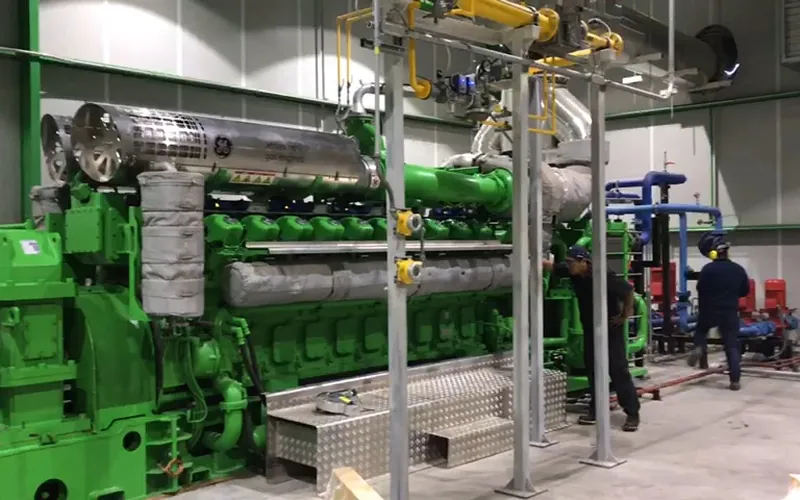
Organic waste from agribusiness, a slaughterhouse or a treatment plant produces biogas as it breaks down. Captured and treated, that gas drives engines that generate power and heat on site. At the Logistik Industrial Park in San Luis Potosí, three Jenbacher JMS620 engines run this way.
What a biogas plant is
Digester, gas treatment and engine in one projectIn a digester, organic waste breaks down without oxygen and releases biogas, a methane-rich mixture. Before it reaches the engine, the gas is treated to remove moisture and compounds that damage equipment. An engine designed for biogas then generates the power, and its heat is recovered for the digester itself or for the process.
The project is only as good as its waste stream: how much there is, how steady it is and how much gas it yields. That is why feasibility starts by characterizing the waste, not by choosing the engine.
When it is not a fit
- If the volume of organic waste is small or irregular through the year.
- If there is no use for the heat and no power demand at or near the site.
- If there is no room for digesters, gas treatment and digestate handling.
- If the waste may be redirected before the contract term ends.
The chain
From waste to energy
Each link is designed with the othersWaste
Characterization of volume, composition and seasonality.
Digestion
Digesters sized for the waste and its retention time.
Gas treatment
Drying and cleaning the biogas to protect the engine.
Generation
Biogas engines, with brand-authorized commercial partners, such as INNIO Jenbacher.
Recovered heat
To warm the digester or deliver to the site’s process.
Operation
24/7 operation and maintenance of the engine and the gas chain.
Reference: Logistik Industrial Park
San Luis Potosí · 2018 · Design and construction (EPC)For the Logistik Industrial Park, the group designed and built a plant with three Jenbacher JMS620 engines running on biogas. The plant has 9,561 kWe of electrical capacity and 7,779 kWt of thermal capacity, started up in November 2018 and operates as the park’s peaking plant.
To date it has generated an estimated 590+ GWh.
Frequently asked questions
What waste can produce biogas?
Organic waste, such as from agribusiness, slaughterhouses, food processing and wastewater. Feasibility measures how much gas yours produces and how steady it is.
Can a natural gas engine run on biogas?
Engines are specified for the fuel they will burn. Biogas has less methane and more impurities than natural gas, and the engine and gas treatment are designed for that.
Can it be combined with solar?
Yes. Biogas can provide firmness for a plant in which solar with storage (BESS) is primary power, or cover peak hours, as at Logistik.
How is a biogas plant paid for?
With the same models as any plant: a power purchase agreement (PPA), energy as a service, BOOT, or a lease, a loan or cash, with terms of 48 to 180 months.
Let’s assess your waste stream
Waste type and volume, power and thermal demand, and location: that is where we start.
By sending you accept our privacy notice.