
Insights · Cogeneration
How much does cogeneration cost in Mexico?
It is the first question every plant manager and CFO asks. The useful answer is not a catalogue price but the cost per kWh you would pay compared with what you pay today. That number depends on your electric and thermal demand, on gas, and on the contracting structure.
Originally published on · Updated on
The metric that decides: cost per kWh
A cogeneration plant is not judged by what it costs to install but by what it saves you every month over the life of the contract. The right comparison is the cost per kWh generated on site (fuel, operations and maintenance, and capital) against your effective cost from CFE, which includes energy, demand, and distribution and capacity charges.
Savings come from two places: the electricity you no longer buy and the heat you no longer produce another way, whether steam, hot water or chilled water through absorption. Without thermal demand to use, cogeneration loses much of its advantage.
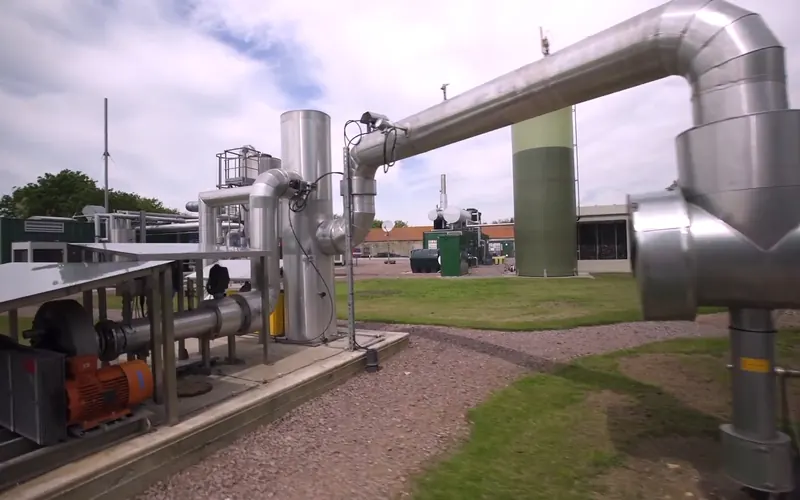
One of the group’s projects as a reference: at Alestra Green Data Center, the 4.2 MW cogeneration plant with absorption chillers delivered documented energy-cost savings of 45%. Where there is heat to use, savings against CFE can reach up to 40–50%; where there is not, the number drops.
What you are actually buying
The price of a cogeneration system is not just the engine. Underestimating any of these items is the most common reason projects disappoint:
- Generating equipment: the gas engine and generator. The largest share of the investment.
- Heat recovery: heat exchangers, recovery boilers and, where it applies, absorption chillers.
- Civil works and installation: foundations, engine house or container, ventilation, electrical and mechanical connections, and integration with your internal grid.
- Engineering and permits: detailed engineering and filings with CNE and, if the plant is grid-connected, with CENACE and CFE.
- Fuel: the main recurring cost and the largest driver of the cost per kWh.
- Operations and maintenance: the contract that keeps the plant available over time.
Why we do not publish a price-per-MW table
Generic capital-cost ranges shift with the engine make and model, the level of heat recovery, site civil works, the gas price in your region and the redundancy your operation requires. A range without your load profile can lead you to reject a profitable project or approve one that is not.
The real number comes from an assessment of your electric and thermal consumption: your CFE bills, your gas or other fuel consumption and the plant’s operating hours.
What moves cost and savings
- Operating hours: a two- or three-shift plant uses the investment better than a single-shift one.
- Heating or cooling demand: using the heat for steam, hot water or chilled water raises efficiency and savings. With absorption it becomes trigeneration.
- Gas price and availability in your region. See gas supply.
- Your current tariff: the higher your effective cost from CFE, the larger the relative savings.
- Redundancy: an N+1 configuration for mission-critical loads costs more than a basic plant.
- Contracting structure: purchase, loan or energy as a service.
A sound analysis also tests the project under a high gas-price scenario to confirm it still pays off if fuel rises.
How it is paid for
Not every structure requires the full investment up front:
- Cash purchase or loan: the company owns the system and keeps all the savings.
- Energy as a service or PPA: a third party invests in the plant and you pay for the energy at an agreed rate, under contracts of 48 to 180 months depending on the structure.
- Lease: fixed payments for the use of the equipment.
Each structure is explained in contracting models and PPA structuring.
When it is not a fit
- No steady thermal demand to use.
- The plant runs a single shift.
- No gas available at the site at a stable price.
- A short horizon at the site.
In those cases, solar with storage (hybrid and BESS) is usually a better first option.
The lowest price is not always the most profitable
A cheap engine that stops, an undersized plant or a contract without an availability commitment end up costing more than the initial price difference. That is why GIS Power designs, builds and operates the complete system, with contracted operations and maintenance. The group has developed 56+ MW of cogeneration in Mexico; see the projects.
Sources
- Group project history: Alestra Green Data Center, documented energy-cost savings of 45%.
- Contract terms: GIS Power payment structures (48 to 180 months).
Want a number for your plant?
Location, electric demand and thermal load: with that we prepare a pre-feasibility analysis.
By sending you accept our privacy notice.