

Insights · Generation
Solar + BESS as primary power for 24/7 loads: what it takes
A data center or a continuous-process plant draws the same power at noon as at three in the morning. The sun does not. Making solar with storage the main source for a load like that is possible, but it is not solved with an annual figure: it is solved hour by hour, with a correctly sized battery and with firm backup that nobody wants to use and that has to be there.
By P.M. Jonathan Luna R., Chief Operating Officer · Published on
What “primary power” means
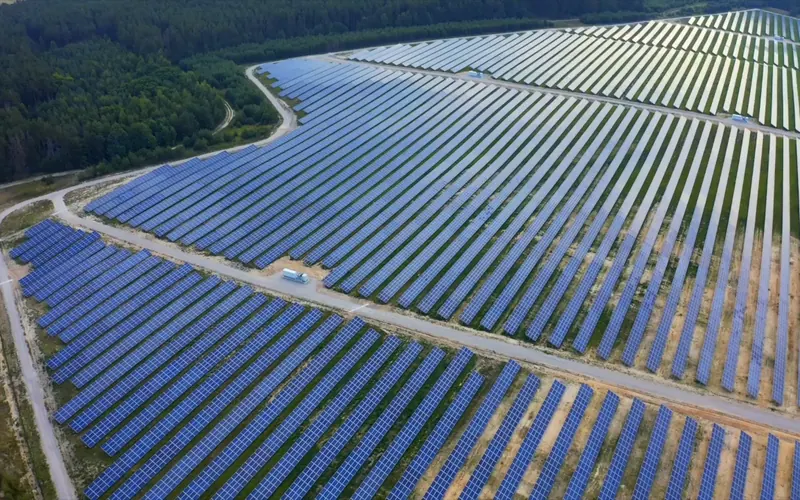
Saying that solar and BESS are a facility’s primary power does not mean they are its only source. It means they are the source that covers most of the consumption in normal operation, the one dispatched first and the one that sets the project’s cost of energy. The other sources, the grid, cogeneration or engines, are there for what the sun and the battery cannot cover: long nights, cloudy weeks, maintenance and failures.
The distinction changes the question. If solar were only an add-on, installing whatever fits on the roof would be enough. As primary power for a load that never stops, the question is how much generation, battery and backup are needed to cover all 8,760 hours of the year, and at what cost.
It is a separate decision from mission-critical redundancy: UPS and emergency generation protect the load against a failure and remain necessary whatever the primary power is.
The 8,760-hour balance
A year has 8,760 hours, and a 24/7 load needs power in every one of them. The most common mistake in a solar proposal is to compare the energy the plant produces in a year with the energy the load consumes in a year. The two figures can match and the load can still run out of power every night.
The right balance is built hour by hour. For each hour of the year, on one side is the actual load, with its staged growth and its cooling peaks; on the other, the expected solar output at that site, the energy the battery can deliver given what it charged during the day, and what the backup contributes. The result shows what an average hides: how many hours the sun covers directly, how many the battery covers, how many are left for the backup and how much solar energy is curtailed at midday for lack of storage.
That balance decides how much battery is worth installing: more battery reduces backup hours, but each additional MWh costs the same even if it is only used in the worst weeks of the year.
Two stages: first the sun covers the day; then more solar and battery cover all 24 hours
How a constant IT load is covered in a Green Data Center, under each option.Illustrative · no figures
Takeaway
Option A is the first, lower-investment stage: the sun covers daytime consumption and the grid or cogeneration covers the night. Option B adds solar and battery to cover all 24 hours.
In both, the grid and firm generation remain as backup. The actual mix comes from each site’s feasibility study, with an 8,760-hour balance.
Illustrative profiles, not to scale. Not a specific project.
Two ways to start: cover the day or cover all 24 hours
The Green Data Center by GIS Power module is a concrete example. It starts from 1 MW of IT load which, at a design PUE of 1.25, draws 1.25 MW in total. Two power options are published for that module:
| Per MW of IT | Option A · first stage | Option B · 24 hours |
|---|---|---|
| What it covers | Daytime consumption; at night, the grid or cogeneration | Full 24-hour consumption from solar and battery |
| Solar generation | 6.5–7.0 MWp | 6.5–7.5 MWp |
| Battery (BESS) | 5–10 MWh | 22–28 MWh |
| Land for the solar plant | Depends on the site | 10–14 ha |
Parameters from a preliminary design concept. Each project is sized in its feasibility study.
The difference between the two options lies mostly in the battery, not in the panels. In option A, the sun covers daytime consumption and the battery works as a buffer: it absorbs swings in solar output and carries the evening transition. At night, the load is taken from the grid or from cogeneration. In option B, the battery has to store during the day the energy for the whole night, with margin for round-trip losses, degradation over the contract and low-irradiance days; that is why it goes from 5–10 MWh to 22–28 MWh per MW of IT.
Option A is the natural first stage, with lower investment and less land. Option B is the destination when land and load justify it. You can migrate from A to B as the load grows, if the electrical design and the land were planned for it from the start.
Firm backup: grid, cogeneration or engines
Even in option B, a 24/7 load needs a firm source that does not depend on the weather. There are three options, and the choice depends on the site:
- The grid. If the site has an interconnection with enough capacity, the grid is the simplest backup. Mexico’s Electricity Sector Law requires an intermittent plant that injects into the grid to have its own backup or pay for it (art. 32), and surplus can only be sold to CFE. Both points should be reviewed when designing the dispatch.
- Cogeneration. Where there is thermal demand, such as data center cooling or process steam, cogeneration is backup that also does work: it produces electricity and uses the heat. The group did this in Querétaro, in 2013–2014, at the first data center with cogeneration in Mexico: the 4.2 MW plant at Alestra supplied 100% of the power and chilled water. More on cogeneration.
- Gas or diesel engines. Where there is no reliable grid and no thermal demand, engines provide firmness. With a battery in the system, they start less often and run at their best-efficiency point.
A rule of thumb: backup is sized to carry the full load with no sun and an empty battery. That is the condition that defines reliability, even if it occurs only a few hours a year.
What the BESS does besides storing energy
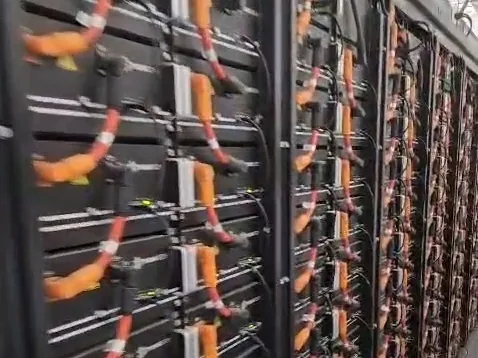
The battery does more than shift energy from day to night. It does three jobs that weigh heavily in operation:
- It holds frequency. Solar output changes within seconds when a cloud passes, and the load changes when a large piece of equipment starts. The battery inverter responds faster than any engine and keeps frequency and voltage stable.
- It covers peaks. An afternoon cooling peak can be covered by the battery instead of starting another unit or drawing more power from the grid.
- It provides reserve. If a source trips, the battery picks up the load instantly and carries it while another unit starts or the grid is restored.
That is how the Baker's Bay microgrid in the Bahamas works, where the group took part as co-EPC between 2020 and 2023. It is an islanded microgrid, with no public grid and no installed solar, that supplies the whole development 24 hours a day: three Jenbacher engines on liquefied natural gas (4.2 MW), two Caterpillar diesel engines (3.6 MW) and a 3 MW / 3 MWh BESS, with N+2 redundancy. There, the BESS holds frequency, covers peaks without starting another unit and acts as reserve while an engine starts. It is the same role the battery plays when the primary power is solar; the difference is that it also stores the day’s energy.
What to ask of the feasibility study
A feasibility study for a 24/7 load must answer with figures from the site, not industry averages. These are the deliverables worth requiring:
- Hourly load profile. Metered if the facility already operates; projected by stage if it is new, with cooling or process peaks.
- P50/P90 solar study. P50 is the expected output; P90 is the output exceeded with 90% probability. Battery and backup are sized against P90.
- 8,760-hour balance. Hour by hour, how much the sun covers, how much the battery and how much the backup, and how much solar energy is lost for lack of storage.
- Battery dispatch. When it charges and discharges, what reserve is held for transients and how usable capacity changes with cycling over the contract term.
- Backup and its cost. Which firm source is used, how many hours a year it is expected to run and what it costs to keep available even when it does not run.
- Permits and grid. Which generation figure applies, which permit the CNE requires given the capacity (Electricity Sector Law, arts. 19 and 30) and which interconnection studies are needed. More on permitting and development and on interconnection.
When solar + BESS as primary power is not the right fit
- If you have no land, on site or nearby, for the solar plant your load requires.
- If your load is concentrated at night and you consume little during the day: the sun would be working for the battery and the cost goes up.
- If you have a large, steady thermal demand: cogeneration may be the more efficient primary power, with solar as a complement.
- If the site’s grid is reliable, has capacity and your supply contract is already competitive: the case must be proven by the balance, not assumed.
Three data points are enough to size a first case: location, hourly or staged load and available land. With those, it becomes clear which option works and how much backup is needed. The solutions are on hybrid and BESS and utility-scale generation; the schemes that keep the plant off your company’s balance sheet are on contracting models.
Sources
- Green Data Center by GIS Power: preliminary design concept for the 1 MW IT module.
- Group project track record: Alestra Green Data Center and Baker's Bay (PMI International and GIS Power track records).
- Electricity Sector Law (Ley del Sector Eléctrico), DOF March 18, 2025, arts. 19, 30 and 32.
Your load never stops. Can the sun cover it?
Location, hourly load and land: we will tell you which option works and how much backup you need.
By sending you accept our privacy notice.