
Insights · Data centers
Power for data centers in Mexico: when the grid cannot arrive in time
Mexico attracts data centers for its location, connectivity and nearshoring. What weighs most on a project’s schedule is no longer land or fiber: it is having enough reliable power, on time. This article explains why and what options a developer has.
Originally published on · Updated on
Demand is moving faster than the grid
Globally, the International Energy Agency (IEA) estimates that data centers used around 415 TWh in 2024, about 1.5% of the world’s electricity, and that their consumption will more than double to around 945 TWh by 2030, slightly more than Japan’s total electricity consumption today.
In Mexico, the Ministry of Energy’s planning scenario expects gross electricity consumption to grow 2.5% a year between 2025 and 2039 (PLADESE 2025–2040). Data centers are a new load added to that curve, concentrated in a few locations and with short start-up timelines.
The bottleneck is interconnection
Generating the power is not the hard part; delivering it to the site is. Transmission lines and substations take years, while a data center is announced in months. To connect, CENACE determines the interconnection and reinforcement works a project needs, and those works are paid by the applicant or included in grid expansion programs (Electricity Sector Law, arts. 48 and 49). That schedule determines when the data center can start. More in grid interconnection.
A developer’s three options
- Wait for interconnection: for a data center with signed contracts, every month of waiting is lost revenue.
- Diesel backup: it covers emergencies, not continuous operation. Plants that run only during emergencies or interruptions need no generation permit (art. 19), but they are not designed to carry base load all year.
- On-site generation: a dedicated plant that carries the load continuously, with the grid as backup once it arrives.
How on-site generation solves it
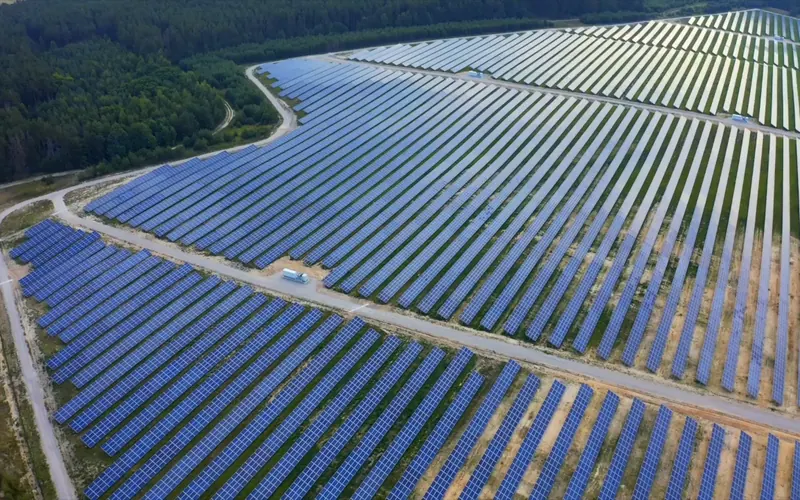
The Green Data Center by GIS Power model uses solar with storage (BESS) as primary power, with grid and gas as backup, and is built and financed in phases as halls fill. Until interconnection arrives, generation can run as bridge power.
- Independence from the grid schedule: the plant runs under self-supply from day one.
- Cooling from heat: where there is gas-fired generation, engine heat drives absorption chillers (trigeneration).
- Redundancy: N+1 or 2N configurations to meet the availability contract.
The Electricity Sector Law allows isolated self-supply, with no grid connection and all consumption inside a private network (art. 31), and grid-connected self-supply of 0.7 MW or more, with a possible simplified procedure between 0.7 and 20 MW (art. 30). If a solar plant exports to the grid, it must have its own storage backup or pay for it (art. 32).
The precedent in Mexico
In 2013–2014 the group designed and built the first data center with cogeneration in Mexico for Alestra in Querétaro: a 4.2 MW plant supplying 100% of its power and chilled water. See the Alestra case and data centers.
When it is not a fit
- The site already has interconnection with the capacity it needs and the start-up date allows it.
- The load is small and stable: the grid with conventional backup may be enough.
Sources
- International Energy Agency, Energy and AI (2025): data center electricity use in 2024 and the 2030 projection.
- SENER, PLADESE 2025–2040, DOF October 17, 2025: gross electricity consumption growth.
- Electricity Sector Law, DOF March 18, 2025, arts. 19, 30, 31, 32, 48 and 49.
- Group project history: Alestra Green Data Center.
Is your data center waiting for interconnection?
Load, location and target start date: we will show you how to operate without waiting for the grid.
By sending you accept our privacy notice.